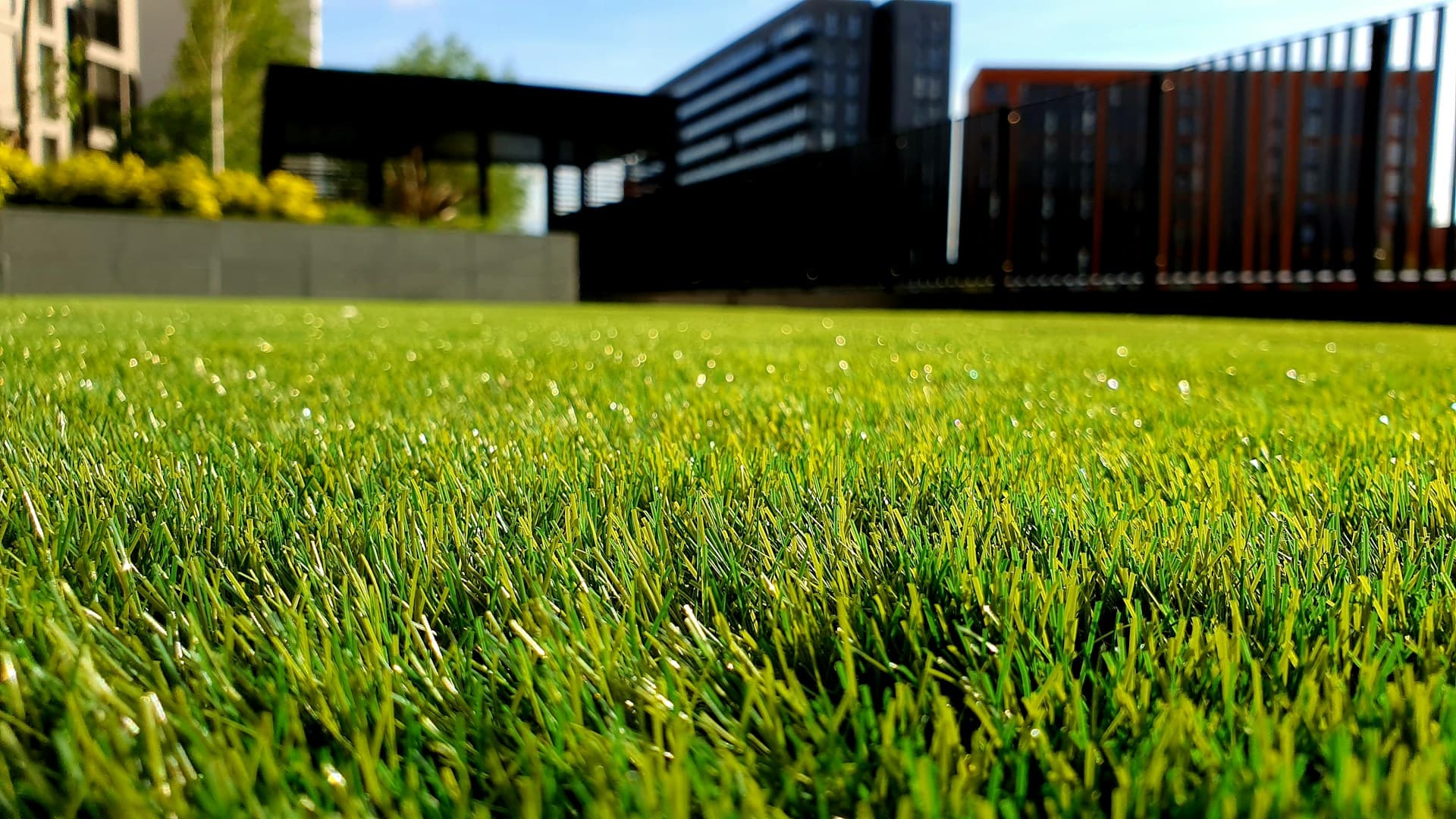
A lawn does not die from one bad week. It dies from a summer where every cut slips to next week. The question is not whether someone can use a mower. It is whether the work happens on time.
Why does the lawn look fine at midsummer and tired in August?
Because at midsummer the grass has often just been cut, and after that growth is at its fastest. If the next cut waits until after the holidays, the blade has stretched and thickened. One hard cut then burns the lawn yellow, and recovery takes weeks. A lawn that still looks good in August is the result of a steady interval, not one successful day. After the June and July rains, growth can be so fast that a week is already too long.
Can I mow it myself?
Yes, if the yard is small and you cut often, a little at a time. Do not wait until the grass is knee high and then take half of it off in one go. The blade dulls, the cut tears, and a yellow patch stays. Mow when the grass is fairly dry, not straight after heavy rain, so the ground does not sink under the machine. A thin layer of clippings can stay. A thick mat of cuttings smothers the lawn the same way wet leaves do.
Where is the line where hiring is the smarter move?
When a cut is skipped every other week, or the yard is too big for an evening. In a housing company the line is immediate if nobody owns a turn. Lawn care is seasonal work, not a one-off job. The agreement states the interval and what the yard is allowed to look like. Then a holiday does not mean the lawn waits until August. One visit at midsummer does not replace a season.
What about watering?
In a dry spell the lawn does not need a hose every evening. A light watering evaporates before it reaches the roots, and the grass learns to keep its roots too shallow. Cutting height matters more. A cut that is too short in a dry summer burns the lawn faster than a week without rain. If a yellow patch comes from the cut, water will not fix it the same day. Let the grass recover and raise the blade next time.
How is a housing company yard different from a house?
On a house yard the resident sees every day when the grass is too long. In a housing company the yard is shared, so it is nobody's evening job unless that was agreed. If you wait for a volunteer day, the lawn suffers, and the day itself cuts too much at once. A larger yard, slopes and tight corners are also a different job from a flat front garden. Then the machine and the interval matter more than enthusiasm.

What do you agree with the customer?
The visit interval, the cutting height, and what happens if it rains or the customer is away. We also say whether edging and collecting the clippings are in the same price. No guessing whether someone came or not. At the end of the season the yard should look like it did in June, not like a yellow field in August.