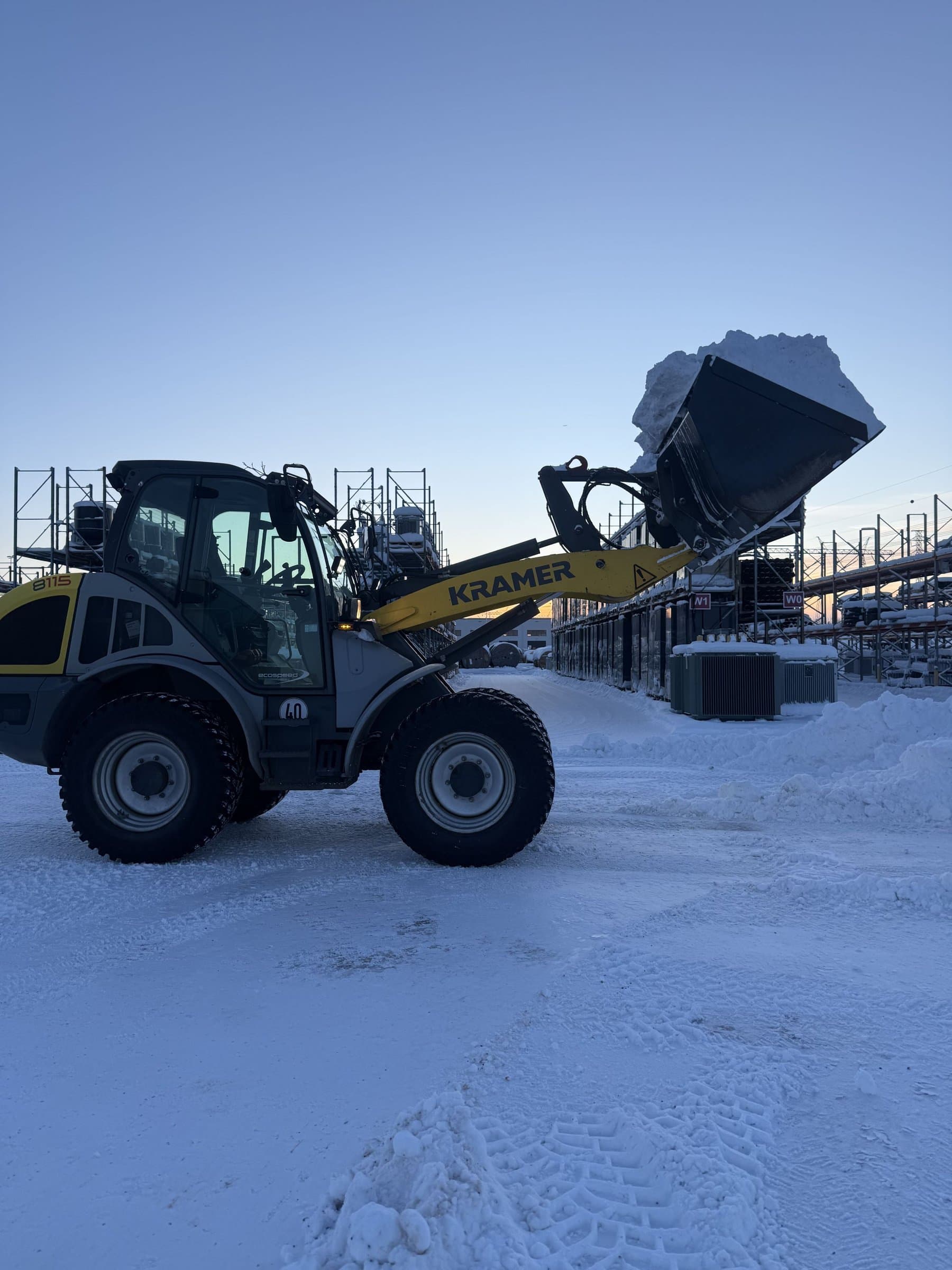
Ploughing the yard and a snow load on the roof get mixed into one job every winter. They are not. One is done from the ground with a machine. The other is done on the roof with fall protection, and the wrong decision hurts someone.
Why doesn't ploughing the yard take care of the roof?
Because the load is on the roof, not on the path. Ploughing makes the route safe in the yard. It does not lighten the eaves, and it does not stop snow from sliding onto the door. Roof snow melts in places from the heat, freezes again, and comes loose at a different time from the snow in the yard. That is why they are separate decisions. A ploughed yard is not a sign that the roof is fine.
When does the roof need attention?
When snow moves at the eaves, icicles grow over a route, a snow guard no longer holds the load, or the roof carries a clearly thick wet layer. Do not climb up to check it yourself. Wet metal, a frozen ladder and the edge of the eaves are where people get hurt. A warning sign is a temporary guard, not a substitute for clearing, if the load is already moving. If people walk under the eaves, the job is more urgent than if the snow falls into an empty yard.
What can I do myself?
Shovel and grit a short, flat house path if the shovel and the grit are ready. Keep the rescue route and the steps open. Leave the roof, high eaves and large areas to someone who does that work. Do not go onto a metal roof to measure the depth. A look from the ground is enough to make the call. If you are unsure, the call is cheaper than a ladder on ice.
What goes wrong in a housing company?
People wait and say it will melt, and then the snow comes down onto the path or a car at the wrong time. Liability does not wait for the next board meeting. The property answers for snow and ice falling from the roof even if a contractor has not been agreed yet. Snow removal and winter maintenance exists so the yard and the roof are decided separately, at the right time. The agreement has to say whether roof snow is included or a separate call-out.
Do you cover on-call?
In winter, yes, when it is ice, a blocked rescue route, or snow that is falling. A call at night is better than your own ladder in the dark. On-call does not mean every yard is ploughed at the same moment. The urgent one is where people or a rescue route are at risk. When you call, say whether it is a path, a rescue route, or the roof.
How do you separate the jobs in practice?
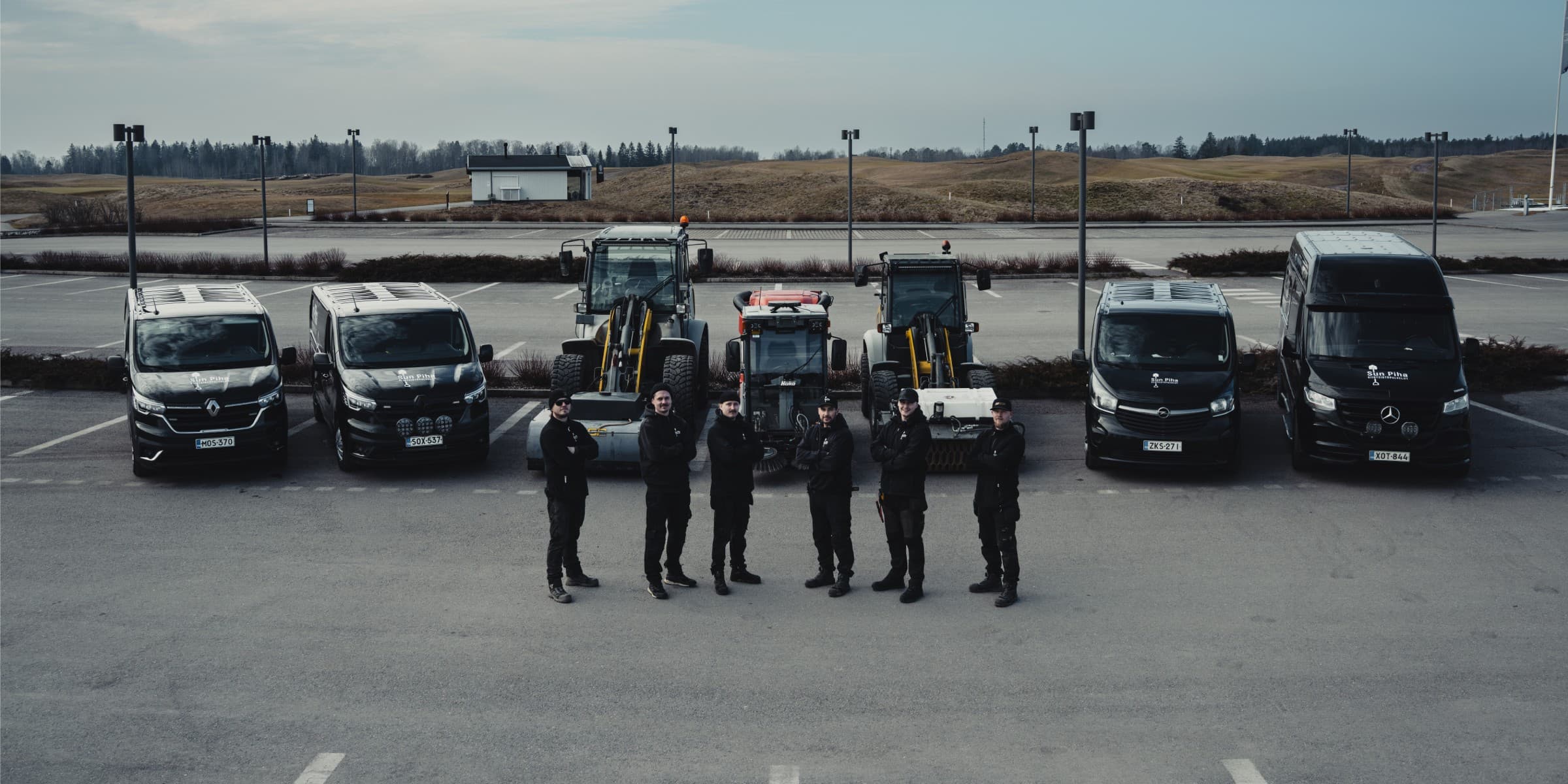
Ploughing, gritting and hauling snow away are one package. Clearing a roof, harnesses and marking the danger zone are another. We say which one it is, and what it costs, before the work starts. Snow is not dropped from an empty roof just in case, and the yard is not left unploughed because the roof will be looked at next week. Both are done when there is a reason.